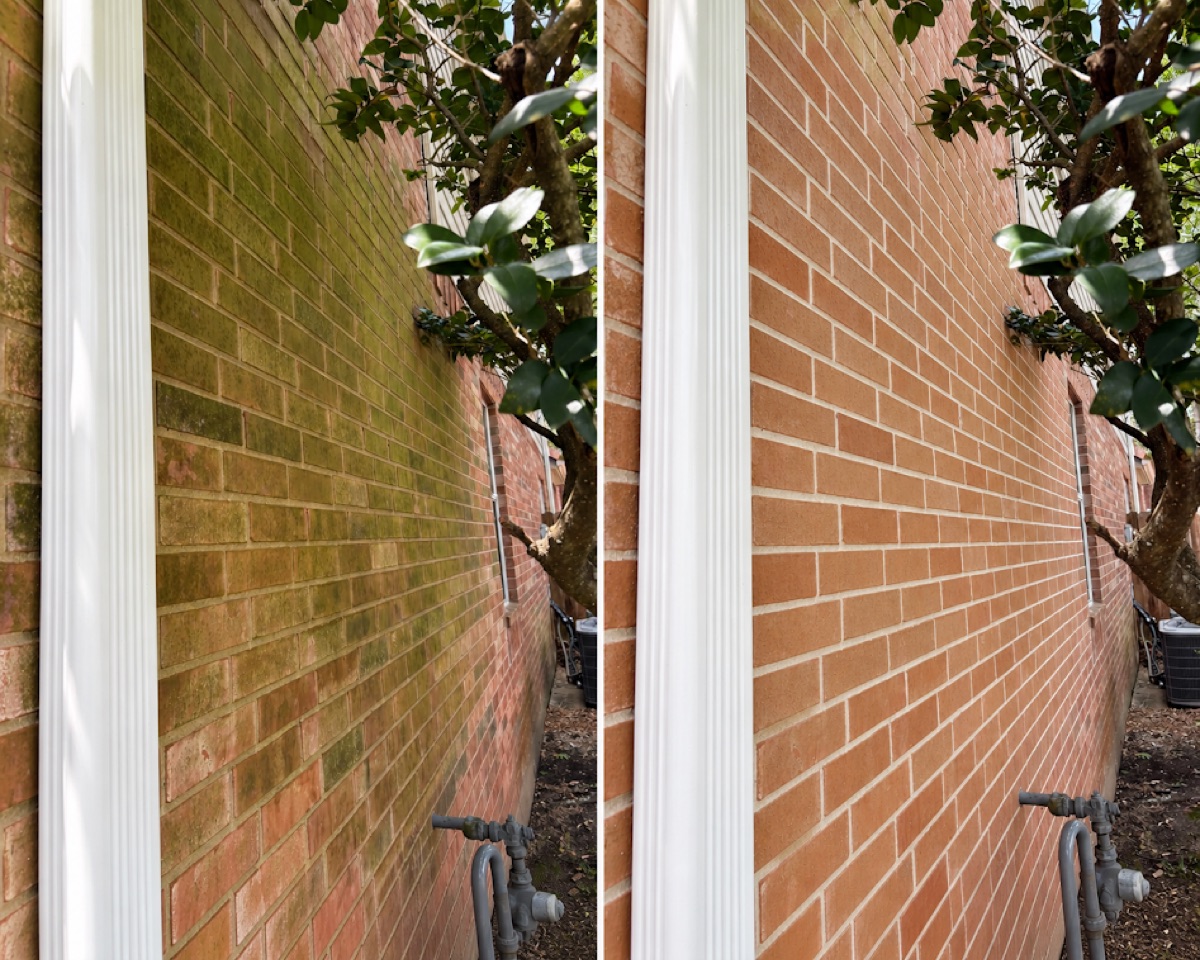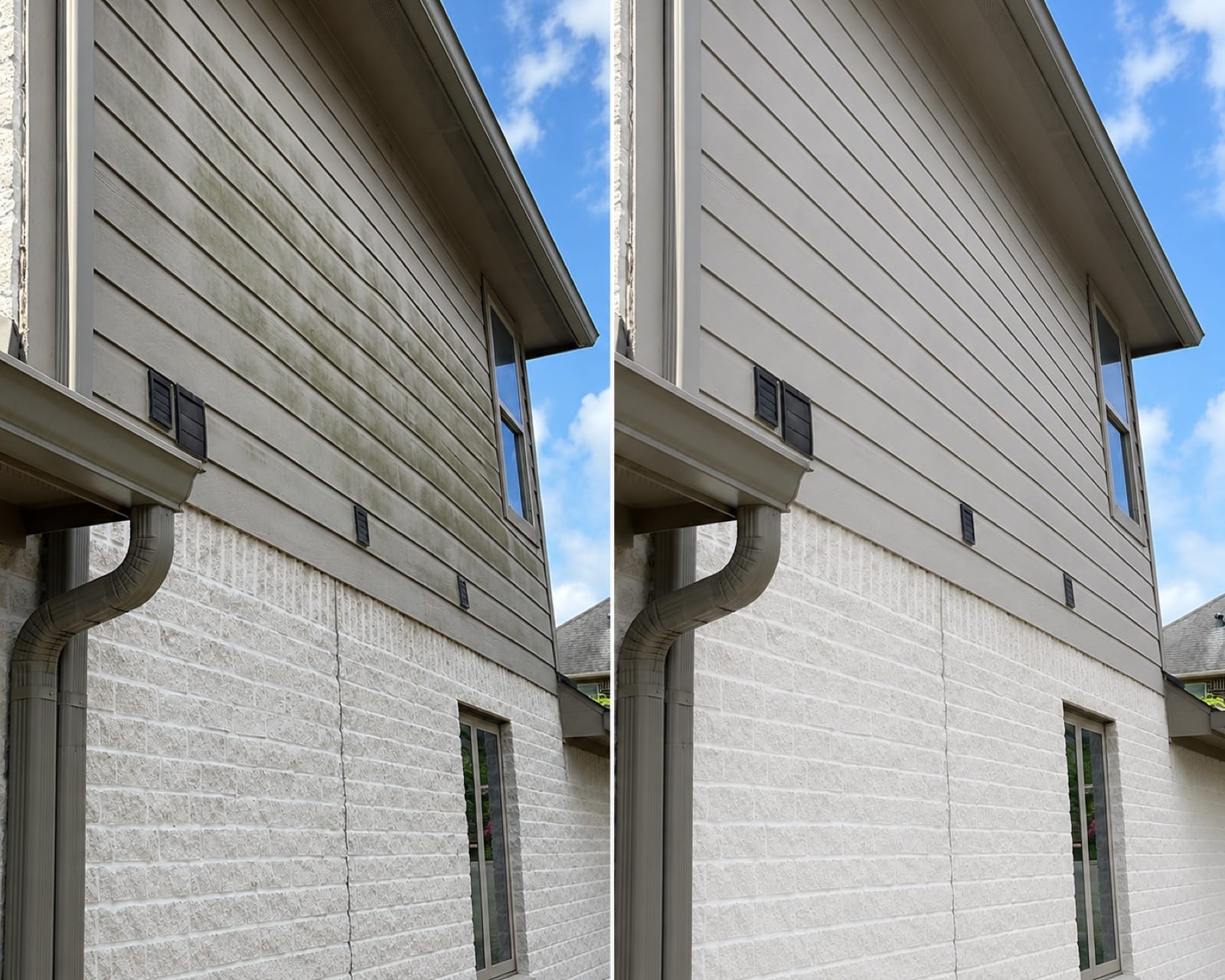
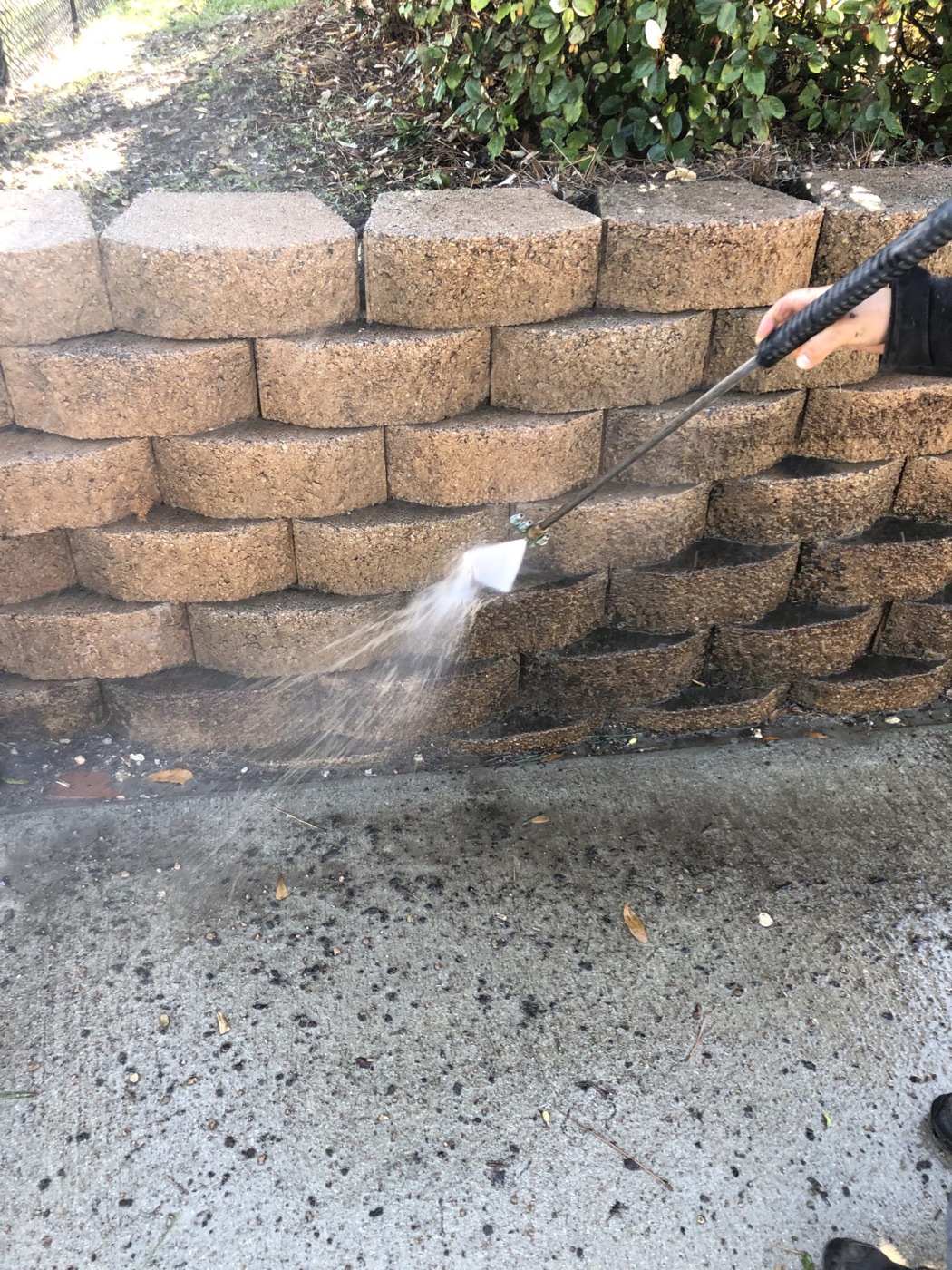
The short answer: soft washing uses low water pressure with a cleaning solution and is the safer choice for siding, stucco, brick, and roofs. Pressure washing uses high-pressure water alone and works best on hard, durable surfaces like concrete driveways and walkways. Using the wrong method on the wrong surface is the most common way homeowners end up with damage, not a cleaner exterior.
Key Takeaway
- Soft washing = low pressure + cleaning solution, best for siding, stucco, brick, roofs
- Pressure washing = high pressure + water only, best for concrete, driveways, walkways
- Too much pressure on the wrong surface can strip paint, crack stucco, or force water behind siding
- When in doubt about a surface, a professional evaluation is worth it before either method is used
What Is Soft Washing?
Soft washing uses low water pressure combined with a specialized, surface-safe cleaning solution to break down and rinse away algae, mildew, and organic buildup at the source, rather than blasting it off. Because it relies on the cleaning solution rather than force, it's gentler on delicate or porous surfaces and is generally the standard approach for house exteriors.
What Is Pressure Washing?
Pressure washing uses high-pressure water alone, without a cleaning solution doing most of the work, to physically blast dirt, loose paint, and grime off hard, durable surfaces. It's effective on concrete and similar materials specifically because those surfaces can tolerate the mechanical force without damage.
Water Pressure and Cleaning Solution Differences
The core difference isn't just intensity, it's the approach:
- Pressure washing relies almost entirely on water pressure (often well above 3,000 PSI on driveway-rated equipment) to mechanically strip away buildup.
- Soft washing uses much lower pressure, closer to a standard garden hose, and does most of the actual cleaning work through a solution designed to break down algae, mold, and mildew before a low-pressure rinse.
This is why soft washing can clean effectively without the risk that high pressure poses to painted or porous surfaces.
Which Method Fits Each Surface
| Surface | Recommended Method | Why |
|---|---|---|
| Brick | Soft washing | Porous mortar can trap algae; high pressure can erode mortar lines over time |
| Stucco | Soft washing | High pressure can crack, gouge, or wear down textured finishes |
| Painted siding / Hardie board | Soft washing | Excess pressure can strip paint or force water behind panels |
| Vinyl siding | Soft washing | Gentler on seams and less likely to push water into the wall cavity |
| Concrete driveways & walkways | Pressure washing | Durable, non-porous surface built to handle mechanical force |
| Wood or vinyl fences | Soft washing (wood) / Case-by-case (vinyl) | Wood can splinter or gray under high pressure; condition-dependent for vinyl |
| Roofs (shingle) | Soft washing | High pressure can strip protective granules and shorten shingle life |
If you're weighing options for your own home, our house washing service covers the soft-wash side of this table, while our pressure washing service covers driveways, walkways, and other hard-surface cleaning.
The Risks of Using Too Much Pressure
It might seem like more pressure means a cleaner result, but on the wrong surface, excessive force can:
- Strip or chip paint
- Crack or gouge stucco
- Force water behind siding panels, leading to trapped moisture
- Damage caulking and window seals
- Strip granules from roof shingles, shortening their lifespan
- Etch or pit softer masonry surfaces
This is the main reason soft washing has become the standard for residential exteriors and roofs: it cleans effectively without putting these surfaces at risk.
Common Misconceptions
"More pressure always means a better clean." Higher pressure removes buildup faster, but on siding, stucco, and roofs, it often causes damage before it finishes cleaning, and can push dirt into a surface rather than lifting it off.
"Soft washing is just a weaker version of pressure washing." Soft washing is a different method entirely, built around a cleaning solution rather than force. On the surfaces it's meant for, it typically outperforms pressure washing because it addresses the algae or mildew at the surface rather than just blasting the top layer.
"Any pressure washing company can safely soft wash." The equipment and solution matter. A pressure washer used at low settings isn't the same as a proper soft-washing setup, and the cleaning solution used matters as much as the pressure level.
"Pressure washing is fine for a roof if you're careful." Even careful, controlled pressure washing can strip granules from asphalt shingles. Soft washing is the safer choice for roofs regardless of operator skill.
When Each Method Should Be Used
Use soft washing for house siding, stucco, brick, roofs, and most painted surfaces, anywhere algae, mildew, or organic growth is the main problem and the surface itself is more delicate.
Use pressure washing for concrete driveways, walkways, patios, and other hard, non-porous surfaces where dirt, oil stains, or general grime need to be physically lifted and the surface can tolerate the force.
When Professional Evaluation Is Appropriate
Some surfaces don't fit neatly into either category, older or already-damaged stucco, weathered wood, aging mortar, or a roof with unknown shingle condition. In those cases, it's worth having a professional evaluate the surface before either method is used. A qualified crew will check the material, its condition, and any existing damage first, then choose the pressure level and solution accordingly, rather than defaulting to maximum pressure because it seems like the faster option.
Frequently Asked Questions
Is soft washing safe for painted siding?
Yes. Soft washing uses low pressure and a surface-safe cleaning solution, making it gentler than high-pressure washing for painted wood, vinyl, and Hardie board. It's less likely to strip paint or push water behind siding panels.
Can pressure washing damage brick or stucco?
Yes, high-pressure washing can erode mortar lines in brick and crack or gouge stucco, especially older or textured finishes. Soft washing is generally the safer choice for both surfaces.
Is it safe to pressure wash a roof?
Standard high-pressure washing is not recommended for asphalt shingle roofs, since it can strip protective granules and shorten the roof's lifespan. Soft washing is the safer method for roof cleaning.
What surfaces should not be pressure washed?
Painted siding, stucco, older or soft brick, asphalt shingle roofs, and weathered wood generally should not be cleaned with high-pressure washing alone. Soft washing is the safer option for each of these.
Which is better for a house with vinyl siding: soft washing or pressure washing?
Soft washing is generally the better choice for vinyl siding. It cleans algae and pollen buildup effectively while reducing the risk of forcing water behind the panels, which can happen with high-pressure application.
Not sure which method your home needs? Explore our house washing and pressure washing services, or request a free quote and we'll recommend the right approach for your property.